
The Working Class Will Save the West


By Michael Parker
16th October 2025
London
George Orwell is often credited with the line, “Some ideas are so absurd that only intellectuals could believe them.” When certain individuals and therefore ideas become untethered from ordinary experience or common sense, they appeal more to abstract theorists than to people grounded in everyday life. It is precisely that disconnection which gives the working class — by virtue of being less enchanted by intellectual fashions often founded on “isms” or “ists” — the capacity to resist the radical illusions of our time. In so doing, they may become the force that ultimately saves the West.
Intellectual fads abound: the deconstruction of Western civilization, theories of whiteness as original sin, radical gender theory divorced from biology, postmodern analyses of language, and more. These ideas often emerge within academic or avant-garde circles, far removed from the lived realities of most citizens. For people whose lives are dominated by toil, bills, family responsibilities, and community bonds, these abstract ideologies can appear frivolous, incoherent, or even absurd.
Throughout history, immense suffering has often been inflicted by authoritarian figures such as Genghis Khan, Adolf Hitler, and Joseph Stalin. Yet, many among the working class find themselves perplexed by the contemporary elite’s intense reaction to Donald Trump—particularly their alarm over his advocacy for stricter border controls and his characterization of mainstream media outlets like CNN as “fake news.”
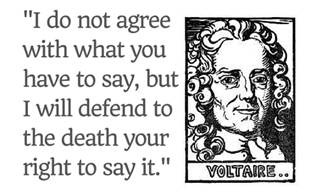
Moreover, members of the working class increasingly observe a shift within the contemporary left, wherein the traditional liberal commitment to free speech—epitomized by Voltaire’s principle, “I disapprove of what you say, but I will defend to the death your right to say it”—appears to have been supplanted. Instead, they witness instances where individuals face police intervention for expressing controversial views, whether online or in informal settings such as pubs. The prevailing ethos among segments of the modern left seems to suggest that unless one has internalized the ideological frameworks endorsed by elite institutions, their right to participate in public discourse should be revoked manifesting in practices such as deplatforming and, in extreme cases, social ostracization. This sentiment is echoed in the experiences of various American conservatives, including figures like Charlie Kirk, who argue that dissenting voices are increasingly marginalized.
Professor Edward Dutton helped to popularise the term “midwit” which is based on the somewhat hyperbolic notion that the least intelligent will agree with the most intelligent because the least intelligent gets to the correct conclusion through instinct, and the most intelligent get to the correct conclusions from a deep knowledge of facts, having performed research and understanding a substantial about of analysts. The midwit, which is in the majority within this paradigm is divorced from thinking, and led to his conclusions by others, arguably the views of the elites expressed in the mainstream media.
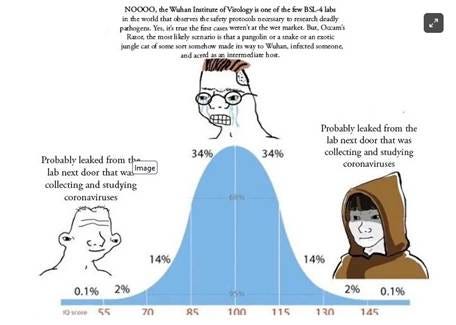
Online Reddit/ Substack type world, Midwit parody
This working-class “immunity” stems from necessity. Working-class people rarely have the luxury of experimenting with multiple identities, ever shifting pronouns, or prolonged ideological self-analysis. Their obligations are immediate: rent, heating, food, schooling for children, health care. Because they must deal with reality in concrete terms, they often possess sharper instincts about what works, what is stable, and what is destructive.
It is not a claim of moral or intellectual superiority, but of epistemic immediacy: lived experience gives the working class a kind of calibration that philosophizing cannot replicate. That is why when elites advance radical social theories, these theories often fail to resonate—or even offend—those outside elite cultural enclaves.

Protesters at a Tommy Robinson demonstration, London, 2025
Current times are somewhat of a political irony in that the working class are opposing the modern left which is in stark contradiction to the situation in previous times and the base concepts in Marxism. The modern left is not the friend of the working class as the left once was having taxed them into oblivion, replaced them through mass-migration and bypassed them in the natural hierarchy, focusing on the ants, snake and the planet instead.
As ideas diverge further from common life, the break becomes painful and obvious. The working class begins to push back.
A few recent examples are illuminating. The legitimacy of law and order & support for social movements - the ascent of Black Lives Matter as an ideological and political force was met by many working-class voices who questioned both the rhetoric and the real-world consequences of the movement. Even some local activists or rank and file supporters expressed concern about violent episodes, property destruction, and lack of accountability. The contrast between media praise and grassroots disquiet became more visible over time.
Border policy and national sovereignty - when political elites clamour for open borders or demonize national identity, many working-class citizens recoil. They sense that a country without immigration control ceases to function meaningfully as a polity. The backlash to such policies was evident in the appeal of figures like Donald Trump or ideas such as “take back control” in Brexit debates.
Pandemic-era mandates and statistics - during COVID, the immense authority granted to technocrats, epidemiologists, and public health bureaucracies was seldom met without scepticism outside professional circles. In many working-class communities, people asked direct, commonsense questions about trade-offs, harms from lockdowns, and counterfactuals—often without the benefit of modelling but with the benefit of watching what actually happened in their neighbourhoods and workplaces.

Covid19: The Great Reset Conference, 2021 at the World Economic Forum, Davos, Switzerland
Climate and the “Great Reset” - when radical climate policies and globalist agendas begin to impose massive costs on energy, industry, travel, and agriculture — without showing proven returns in real, measurable benefits — people notice rapidly. The poorest and most vulnerable always suffer first. In many places, workers have pulled back from ideological climate activism as policies translate into higher energy bills, restrictions on mobility, and layoffs in carbon-intensive sectors.
In each case, the rupture becomes a moment of awakening: elites speaking in abstractions, while many ordinary people suffer concretely.
The political class often persists past its expiration date, like bureaucrats clinging to authority long after their legitimacy has eroded. Recall how some Soviet technocrats continued routines for a time after the USSR’s collapse, unable or unwilling to adapt. In contemporary Western democracies, many elected officials and civil service elites seem to operate on autopilot—responding to well-funded lobbyists, interest groups, NGOs, and institutions rather than to the everyday needs of citizens.
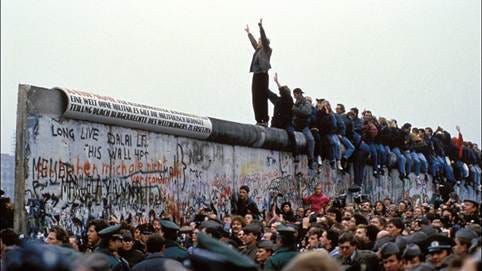
Collapse of the Berlin Wall, 1989
This results in a yawning disconnect. Policies created in distant think tanks or university seminars bump into the unyielding realities of local economies, national debt, broken supply chains, and social disintegration. The political class, lacking the day-to-day feedback of suffering or triumph, is poorly calibrated to see when an experiment has failed. As a result, disastrous policies continue longer than they should, eroding legitimacy and consensus.
The United Kingdom provides a useful illustration of these dynamics. Once the engine of global commerce, science, industry, and culture, the UK today is burdened by high public debt, weak growth, stagnating infrastructure, and a population that increasingly struggles to meet basic costs like energy, housing, and childcare.
The dislocations of globalization, deindustrialization, and financialization have disproportionately damaged working-class and lower-middle-class communities. Elite policies—whether financial deregulation, welfare reform, education experiments, or green mandates—have too often prioritized ideology over stability.
In such a context, ordinary people do not simply resist; they recalibrate. They vote for disruption, for outsiders, for populist or reformist movements promising to return control to the people. They stop trusting institutions that appear oblivious or hostile to their plight.
When policies go awry, whose suffering is visible and immediate? The working class’s pain is daily and obvious. They cannot hide behind buffers of wealth, institutional sinecures, or ideological insulation. This means they are first to detect systemic failure—and also first to rebel against it.
Contrast this with elites or bureaucrats, whose mistakes may be cushioned by networked privileges, income diversification, or political insulation. A broken subsidy scheme or a failed climate measure may cost the working-class tens of thousands per household, but elite damage is fractionally felt or redistributed. This asymmetric feedback loop means the working class becomes the dominant negative feedback force on systemic overreach.
Thus, reform movements like Reform UK in Britain or Trump-aligned movements in the U.S. find their initial and strongest traction among working-class voters. These movements are often caricatured or dismissed by elites as populist, demagogic, or backwards—but they reflect an essential corrective impulse: a rejection of absurd theory and a reassertion of grounded common sense.
This thesis is not flawless or uncontested, and several caveats and critiques must be addressed: class is not monolithic. The “working class” encompasses many demographics, views, and identities. Race, gender, region, age, and culture all mediate how ideas are received. In particular, movements that appeal only to a narrow slice of working-class identity risk excluding or provoking backlash from others.
Some political discourses deliberately racialize the working class using “white working class,” as a way to alienate or marginalize working-class communities. Scholars caution that representing the working class through a racial lens can both misrepresent the data and entrench racial resentment rather than class solidarity.
Elites can co-opt or hijack populist movements. Because the working class often lacks institutional infrastructure, movements that begin as corrective can be taken over by charlatans, demagogues, or ambitious elites. Vigilance is required to preserve the orientation toward real accountability and local responsiveness.
Not all elite ideas are false or destructive. Science, liberal democracy, human rights, and technological progress have been advanced by intellectual elites. The claim is not that all theoretical reasoning is suspect, only that when theories deviate radically from lived experience without compensating evidence, they become suspect.
Complex challenges require expertise. Many issues—climate, epidemiology, macroeconomics—are genuinely complex. There is a role for experts, models, and domain knowledge. The tension is between overreach and humility: elites must remain accountable to everyday consequences.
To support and scrutinize this perspective, let us examine some relevant academic findings and debates. The rise of populism in Europe, especially Germany, has been interpreted as a reconfiguration of political cleavages: the older economic left–right axis is giving way to a “cultural” axis (globalization, identity, tradition). Many populist parties channel discontent from working-class voters who feel culturally and economically displaced.
In climate politics, critics argue that decarbonization policies are being depoliticized and turned into rent-seeking regimes benefiting elites. A Marxist critique of the EU’s Emissions Trading System shows how regulatory burdens, carbon rents, and leakage favour wealthy actors over ordinary producers and consumers.
Matthew T. Huber, in Climate Change as Class War, argues that a lasting climate movement must be rooted in working class demands. Otherwise, climate activism risks being an elite project divorced from people’s everyday material concerns.
Multiple data points substantiate Huber’s analysis—among them, the case of Phoebe Plummer, a Just Stop Oil activist who infamously doused Vincent van Gogh’s Sunflowers at London’s National Gallery with tomato soup. Plummer comes from the affluent Chelsea district and received her education at St Mary’s School, Ascot, for three years, followed by Mander Portman Woodward College in Kensington. She later attended the School of Oriental and African Studies (SOAS), University of London.

Just Stop Oil, National Gallery, London 2024
Experiments on public goods contributions in climate-dilemma contexts show that participants with fewer resources often contribute disproportionately more to collective goals than those with more resources—suggesting that the less-insulated are more willing to take risks or act in solidarity.
These data points and arguments bolster the idea that discontent from working-class communities is neither irrational nor reactionary—in many cases, it is a rational response to structural imbalance.
If the working class is indeed the corrective force for a teetering West, then we must ask: what strategies will amplify that force without enabling demagoguery or fragmentation? Solutions may include the building of durable institutions. Working-class voices need party structures, think tanks, local networks, and educational platforms that resist co-optation. Evidence-based accountability must be demanded, and policies should come with metrics, accountability mechanisms, sunset clauses, and empowerment of local participants to override elites when necessary.
A culture of foster intellectual humility must be undertaken. Experts must re-learn to listen, correct errors in public, and accept that grand utopias often fail when divorced from human-scale feedback.
A focus on subsidiarity would mean that power and decision-making should be devolved as much as possible to local levels. The further away elites are, the more likely they are to bust the calibration between ideas and reality.
In conclusion, the West today finds itself buffeted by overlapping crises—economic stagnation, demographic decline, cultural fragmentation, and environmental anxiety. In many of these arenas, elites have proposed sweeping solutions grounded more in ideology than in stable evidence. The result has been dislocation, resentment, and loss of public trust.
In this context, the working class offers a remedy. Because their lives remain measured by necessity and grounded in the real, they are less easily seduced by intellectual fads. When elites push policies that destabilize society, it is the working class that first feels the pain—and first rejects the absurd.
But for this corrective force to become genuinely constructive, it must avoid pitfalls such as demagoguery, or anti-intellectualism. Instead, it must build a new alliance—between grounded common sense and rigorous accountability. If it succeeds, it may yet salvage the West—not by simply by looking restore the form of past, before the decay but to use that form as inspiration to build the future.
We owe a debt to the working class—not just for sweating in factory halls, nursing the ill, or maintaining infrastructure, but for acting as the immune system of civilization. In moments of radical disorientation, they may yet be the ones who steer us back to sanity.
References
Orwell, G. (1945) ‘Notes on Nationalism’.
GB News (2023) ‘Free speech row: Kent pensioner arrested over tweet’, GB News, 3 November. Available at: https://www.gbnews.com/news/free-speech-row-kent-thought-crime-tweet-police-brexit-books
Mortons Solicitors (2023) ‘Free Speech and Thought Crime: The Case of Julian Foulkes’, Mortons Solicitors. Available at: https://www.mortons-solicitors.co.uk
Malnick, E. (2025) ‘The victims of Britain’s free speech crackdown’, The Telegraph, 3 September. Available at: https://www.telegraph.co.uk/news/2025/09/03/the-victims-of-britains-free-speech-crackdown/
The Independent (2025) ‘UK police accused of overreach in hate speech enforcement’, The Independent. Available at: https://www.independent.co.uk
Smith, J. (2024) ‘Free Speech and Deplatforming in U.S. Universities’, Acta Technologica Dubnicae, 14(1), pp. 45–62. Available at: https://reference-global.com/article/10.2478/atd-2024-0018
Dutton, E. (2022) ‘The Psychology and Rise of the Midwit’, YouTube. Available at:
Mondon, A. and Winter, A. (2020) ‘Whiteness, populism and the racialisation of the working class in the United Kingdom and the United States’, in Whiteness and Nationalism. 1st edn. London: Routledge, pp. 19.
Olbrich, E. and Banisch, S. (2022) ‘The rise of populism and the reconfiguration of the German political space’, arXiv. Available at: https://arxiv.org/abs/2106.15712
Cambridge University Press (2025) ‘The de-politicisation of decarbonisation through climate rent: a Marxist critique of the EU emissions trading system’, Cambridge University Press, 2 July. Available at: https://doi.org/10.1017/SusDev.2025.001
Rosenblum, J. (2022) ‘A Successful Climate Movement Must Be a Working-Class Movement’, Jacobin, May. Available at: https://jacobin.com/2022/05/working-class-movement-huber-climate-change-as-class-war-review
Mathiesen, K. (2022) ‘The climate protesters who threw soup at a van Gogh painting. (And why they won’t stop.)’, Politico. Available at: https://www.politico.eu/article/van-gogh-soup-anna-holland-phoebe-plummer-just-stop-oil-sunflowers-painting-protest-jail-sentence/